Urticaria (Hives) Treatment in Zirakpur : Renovin Skin, Hair and Laser Clinic
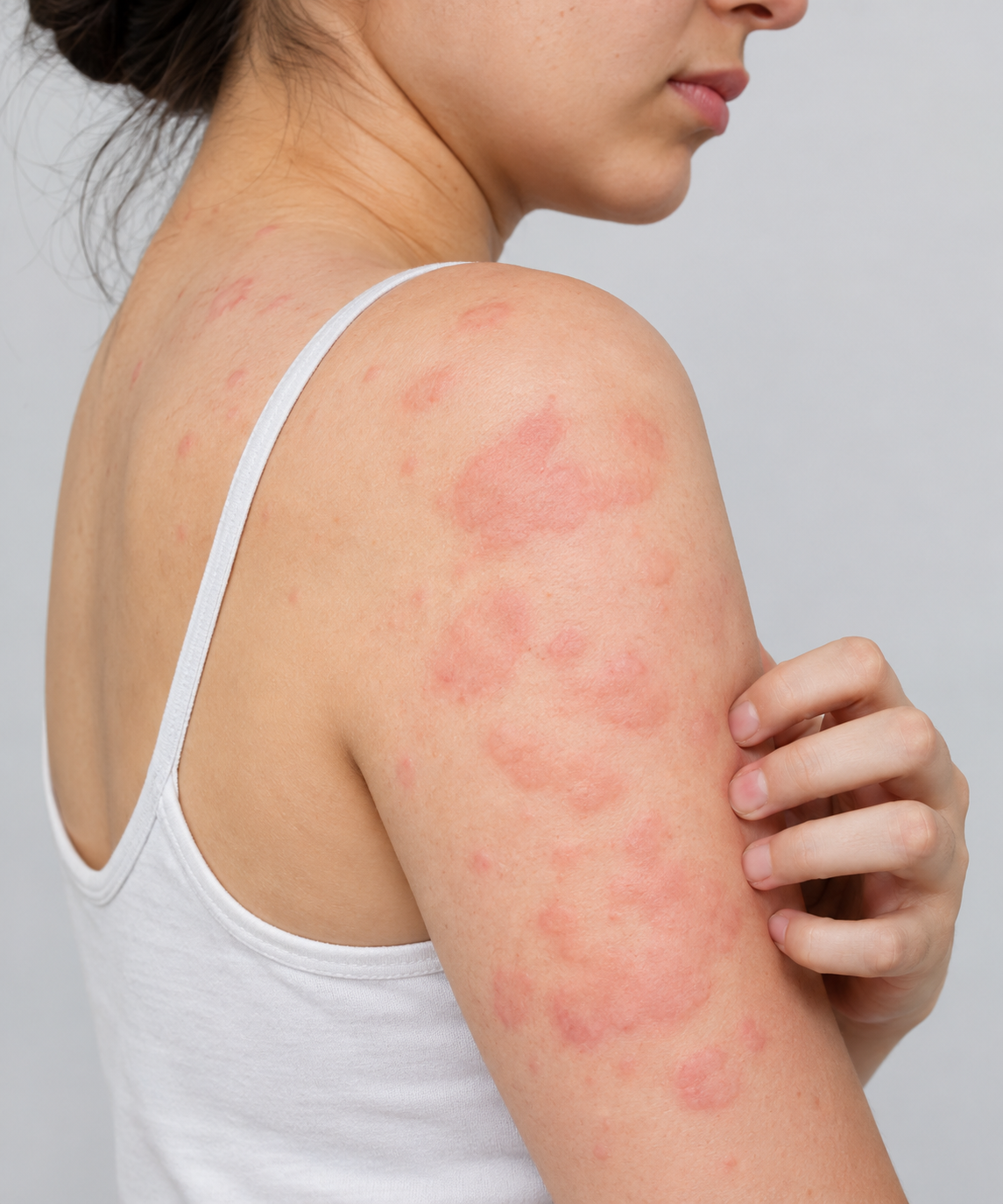
Have you ever noticed sudden, raised, red or skin-coloured patches on your skin accompanied by intense itching? Do these patches appear unexpectedly and then disappear, only to return again later? You may be experiencing urticaria, commonly known as hives.
Urticaria is a common skin condition that can affect people of all ages. While some episodes disappear within a few hours or days, recurrent or long-lasting hives can significantly affect sleep, work, concentration and overall quality of life.
If you are searching for urticaria treatment in Zirakpur, consulting an experienced dermatologist can help identify possible triggers, control symptoms and develop an appropriate treatment plan. Dr. Mohit Dhawan, dermatologist at Renovin Skin, Hair and Laser Clinic in Zirakpur, provides dermatological consultation and treatment for various skin conditions, including allergic and inflammatory skin problems.
What Is Urticaria or Hives?
Urticaria, commonly called hives, is a skin reaction characterized by raised, itchy welts or patches. The lesions may be red, pink or similar to the surrounding skin and can occur anywhere on the body.
Individual hives may change shape, appear in different areas and disappear without leaving a permanent mark. In some cases, swelling can also affect deeper layers of the skin, a condition known as angioedema.
Types of Urticaria
Urticaria can be broadly classified into:
Acute Urticaria
Hives that occur for a relatively short period are generally considered acute urticaria.
Chronic Urticaria
Hives that continue or recur for more than six weeks are generally classified as chronic urticaria.
Chronic Spontaneous Urticaria
Recurrent hives where an obvious external trigger may not be identified are known as chronic spontaneous urticaria.
Inducible Urticaria
Some hives are triggered by factors such as pressure, cold, heat, exercise or other physical stimuli.
Chronic urticaria can be particularly frustrating because the exact cause is not always identifiable. A structured approach involving appropriate diagnosis, trigger assessment and symptom control can help manage the condition.
Common Symptoms of Urticaria
The symptoms of hives can vary from person to person. Common symptoms include:
- Sudden appearance of raised welts
- Intense itching
- Red, pink or skin-coloured patches
- Swelling of affected areas
- Hives that change shape or location
- Recurrent episodes
- Swelling around the eyes or lips in some cases
- Skin irritation that may become worse with scratching
One characteristic of hives is that individual lesions often come and go, while new ones may appear elsewhere.
If your hives are recurring frequently or affecting your daily life, professional hives treatment in Zirakpur can help determine the appropriate management strategy.
What Causes Urticaria?
Urticaria develops when certain cells in the skin release inflammatory substances, including histamine. This can lead to itching, redness and swelling.
Common Triggers of Urticaria
- Certain foods
- Medicines
- Infections
- Insect bites or stings
- Temperature changes
- Pressure or friction
- Exercise and sweating
- Stress
- Certain physical stimuli
- Underlying autoimmune or other medical conditions
However, it is important to understand that not every case of chronic urticaria has an identifiable trigger. Chronic spontaneous urticaria can occur without an obvious external cause.
This is why simply avoiding one particular food or using home remedies may not always solve the problem. A dermatologist can assess your symptoms and medical history to determine the most appropriate approach.
Urticaria Treatment in Zirakpur
The treatment of urticaria depends on its severity, duration, possible triggers and response to previous treatment.
Goals of Urticaria Treatment
- Control itching and swelling.
- Reduce the appearance of new hives.
- Identify and avoid relevant triggers where possible.
- Prevent recurrent flare-ups.
- Improve sleep and quality of life.
For chronic urticaria, second-generation, non-sedating H1 antihistamines are commonly used as first-line treatment. Treatment may subsequently be adjusted by a dermatologist if symptoms remain uncontrolled.
1. Antihistamines
Antihistamines are commonly used to control itching and other symptoms associated with hives. Depending on the individual case, a dermatologist may recommend an appropriate medication and dosage.
It is important not to self-medicate or increase the dose of an antihistamine without professional guidance.
2. Identifying Triggers
If a specific trigger is suspected, your dermatologist may recommend avoiding it. Keeping a record of when hives appear can sometimes help identify patterns.
Things You Can Track
- Foods consumed before a flare-up
- New medicines or supplements
- Exercise or sweating
- Exposure to cold or heat
- Stressful events
- Skin pressure or friction
- Recent infections
Not every suspected trigger will necessarily be responsible, so professional assessment is important.
3. Treatment for Chronic Urticaria
When hives continue for more than six weeks, they may be classified as chronic urticaria. Such cases often require longer-term management rather than simply treating individual flare-ups.
If standard treatment does not adequately control symptoms, dermatologists may consider other treatment options depending on the patient’s condition and response.
4. Managing Angioedema
Some people with urticaria develop deeper swelling known as angioedema. It can affect areas such as the lips, eyelids, hands or feet.
If swelling involves the tongue or throat, or if there is difficulty breathing or swallowing, urgent medical attention is required.
Why Choose Dr. Mohit Dhawan for Urticaria Treatment in Zirakpur?
If you are looking for a skin specialist in Zirakpur for hives or urticaria, Dr. Mohit Dhawan is a dermatologist practicing at Renovin Skin, Hair and Laser Clinic.
His listed qualifications include MBBS and MD – Dermatology, Venereology & Leprosy. He provides dermatological consultation for various skin, hair and allergy-related concerns.
What Can Be Evaluated During a Consultation?
- The pattern and duration of your hives
- Possible triggers
- Associated swelling
- Previous medications
- Other symptoms
- Whether your condition is acute or chronic
- Whether additional evaluation may be appropriate
Rather than repeatedly treating symptoms on your own, a dermatologist-guided approach can help establish a more structured treatment plan.
How Is Urticaria Diagnosed?
Urticaria is usually diagnosed through a detailed medical history and examination of the skin.
Questions Your Dermatologist May Ask
- When did the hives first appear?
- How long does each individual patch last?
- How frequently do they occur?
- Are they associated with itching or swelling?
- Do they appear after eating certain foods?
- Have you started any new medication?
- Do heat, cold, exercise or pressure trigger symptoms?
- Have you recently experienced an infection?
- Have you experienced swelling of the lips, eyes or other areas?
Testing is not necessarily required for every patient. When indicated, your dermatologist may recommend investigations based on your symptoms and clinical history.
Tips to Manage Hives at Home
Along with professional treatment, some simple measures may help reduce discomfort:
- Avoid known triggers whenever possible.
- Wear loose, comfortable clothing.
- Avoid excessive scratching.
- Keep the skin cool if heat worsens symptoms.
- Follow the medication schedule recommended by your dermatologist.
- Maintain a record of recurring episodes and possible triggers.
- Avoid starting or stopping medicines without medical advice.
Some pain medicines, including certain NSAIDs, may worsen hives in some people, so discuss medication choices with your doctor if you experience recurrent urticaria.
When Should You See a Dermatologist?
You should consider seeing a dermatologist if:
- Hives keep coming back.
- Symptoms have continued for several weeks.
- Itching is affecting your sleep.
- Hives interfere with work or daily activities.
- You are unsure what is triggering the condition.
- Over-the-counter treatment is not providing adequate relief.
- You experience repeated swelling along with hives.
When Is Emergency Medical Care Required?
If you experience difficulty breathing, difficulty swallowing, throat tightness, fainting or rapidly developing swelling of the tongue or throat, seek emergency medical care immediately.
Urticaria Treatment in Zirakpur – Take the Right Step
Recurring hives should not be ignored, especially when they are affecting your everyday life. Although some episodes of urticaria resolve on their own, persistent or recurrent symptoms may require proper dermatological evaluation and long-term management.
For people searching online for urticaria treatment in Zirakpur, hives treatment in Zirakpur, or the best skin specialist in Zirakpur, Dr. Mohit Dhawan at Renovin Skin, Hair and Laser Clinic can be considered for a professional dermatology consultation.
Book a dermatology consultation to discuss your symptoms and understand which treatment approach may be appropriate for your specific condition.
Frequently Asked Questions About Urticaria
1. What is the best treatment for urticaria?
Treatment depends on the type and severity of urticaria. Second-generation, non-sedating antihistamines are generally recommended as first-line treatment for chronic urticaria. A dermatologist can customize treatment according to the patient’s symptoms and response.
2. Can urticaria be permanently cured?
Some cases of acute urticaria resolve completely. Chronic urticaria can be more unpredictable, but effective treatment can control symptoms and improve quality of life. The goal is often sustained control rather than simply treating individual outbreaks.
3. Is urticaria caused only by food allergy?
No. Food is only one possible trigger. Hives may also be associated with medications, infections, physical triggers, autoimmune mechanisms or may occur without an identifiable cause.
4. How long does chronic urticaria last?
Urticaria that continues or recurs for more than six weeks is generally considered chronic. The duration can vary significantly between individuals.
5. Can stress cause hives?
Stress may contribute to or worsen symptoms in some people, although it is not necessarily the underlying cause of every case of urticaria.
6. Should I avoid all allergy-causing foods?
Not necessarily. Eliminating large numbers of foods without evidence can lead to unnecessary dietary restrictions. Food avoidance should ideally be based on a clear history or professional medical assessment.
7. Can I take antihistamines every day for hives?
Some patients with chronic urticaria may require regular antihistamine treatment, but the specific medicine and dosage should be determined by a healthcare professional. Do not increase the dose yourself.
8. When should I see a skin specialist for hives?
You should consult a dermatologist when hives are recurrent, persistent, severe, interfering with sleep or daily activities, or associated with significant swelling.
9. Who is Dr. Mohit Dhawan?
Dr. Mohit Dhawan is a dermatologist practicing in Zirakpur. His listed qualifications include MBBS and MD in Dermatology, Venereology & Leprosy. He practices at Renovin Skin, Hair and Laser Clinic in Zirakpur.
10. Where can I get urticaria treatment in Zirakpur?
You can consult Dr. Mohit Dhawan at Renovin Skin, Hair and Laser Clinic, Zirakpur, for evaluation of hives, recurrent skin allergies and other dermatological concerns.
Follow Us On Instagram

![✨ Eyebrow Lift With Botox — A Subtle Lift, A Refreshed Look ✨
Do your eyebrows look slightly droopy or make your eyes appear tired?
An eyebrow lift with Botox can help create a subtle, more lifted and refreshed appearance by relaxing specific muscles around the brows. 💜
With precise treatment and a personalised approach, the goal is a natural-looking enhancement that complements your facial features.
📍 Renovin Skin, Hair & Laser Clinic, Zirakpur
📞 Book your consultation today.
[Renovin Skin Hair And Laser Clinic] [Eyebrow Lift With Botox] [Botox Treatment] [Brow Lift] [Facial Rejuvenation] [Aesthetic Dermatology] [Non Surgical Brow Lift] [Skin Clinic Zirakpur] [Botox Zirakpur]
#RenovinClinic #EyebrowLift #BotoxTreatment #FacialRejuvenation #ZirakpurSkinClinic](https://renovinskincare.com/wp-content/plugins/instagram-feed/img/placeholder.png)